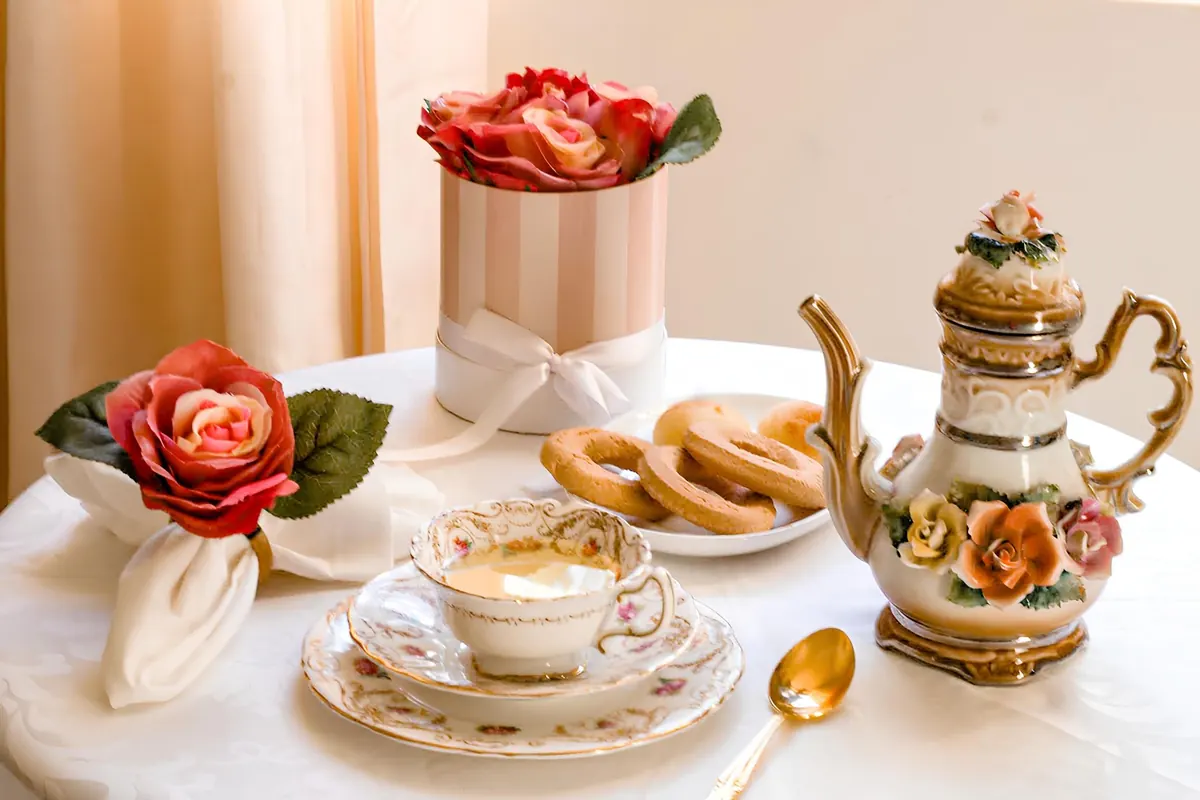
Afternoon Tea vs. High Tea: What's the Real Difference?
Two friends plan a weekend outing. One suggests afternoon tea, the other says high tea, and both picture the same thing: a three-tier stand, a pot of Darjeeling, and a small war over whether the cream goes on before the jam. The words sound interchangeable. They are not, and the muddle is old enough that tearooms get it wrong on their own menus.
Where the Two Meals Come From
Afternoon tea grew out of aristocratic boredom — or at least a long wait. The story most often told credits Anna, the seventh Duchess of Bedford, who in the 1840s found the stretch between a midday luncheon and a dinner served around eight o'clock uncomfortably hungry. She began asking for tea and light cakes in her room in the late afternoon, and the habit proved contagious. By the end of the Victorian era, afternoon tea was a social occasion with its own wardrobe, its own calling hours, and its own rules about who poured.
High tea came from the other end of the day, and the other end of the social scale. Most people worked with their hands from early morning, and the main evening meal landed soon after the workday ended — five, six, seven o'clock. It was eaten at a proper dining table, and in the language of the time a tall table was a high table. The name describes furniture, not fancy food. That is the detail most people get backwards.
Afternoon Tea: A Pause, Not a Meal
Afternoon tea sits between about 3:30 and 5 p.m. It was once called low tea, because it was served on low tables in drawing rooms and gardens, with guests sunk into sofas and armchairs. The food is deliberately small. A classic menu runs in three movements:
- Finger sandwiches, cut thin and crustless — cucumber with plenty of butter, smoked salmon, egg mayonnaise, ham with a scrape of mustard
- Scones, warm, with clotted cream and jam (Devon puts cream first, Cornwall puts jam first, and both counties will tell you the other is wrong)
- Small sweets — a fruit tart, an éclair, a square of Battenberg, a slice of Victoria sponge
The tiered stand has an order: sandwiches on the bottom, scones in the middle, sweets on top. Work upward. If that sounds like a lot of food, remember the portions are modest and the pace is slow. And a plain scone with cream, jam, and nothing else, alongside a pot of tea, is a cream tea — a smaller relative, not a synonym.
High Tea: Supper With a Pot of Tea
High tea is a meal, eaten at a meal's hour: usually between five and seven in the evening, whenever the working day is done. The table is set properly. There is a pot of strong tea, and it gets refilled.
What actually lands on the table
Expect meat pies, cold ham, sausages, a shepherd's pie, boiled potatoes, pickles, plenty of bread and butter, cheese, and perhaps a slice of fruitcake or a jam roly-poly to finish. Children ate with the family, which gave high tea an early, practical rhythm. In Scotland, Northern England, and parts of Wales, the word tea still means the evening meal — "what's for tea?" is a question about dinner, not about a beverage. Seen that way, high tea is simply tea done properly: a full supper with a pot in the middle of it.
Why Hotels Call Everything High Tea
Here is where most modern confusion is manufactured. "High tea" sounds grander and more expensive than "afternoon tea," so hotels and restaurants borrow it for what is, in fact, a three-tier afternoon tea. Add a glass of something sparkling and the menu becomes a royal tea or a champagne tea. There is nothing wrong with the experience. The label is just doing marketing work rather than describing history.
So read the signals, not the name. A tiered stand at four o'clock in a hotel lounge is afternoon tea. A pub menu offering pie, pickles, bread and butter, and a pot of tea at six is high tea. Both are good. They are simply not the same meal.
The Difference at a Glance
- Time: afternoon tea, roughly 3:30 to 5 p.m.; high tea, roughly 5 to 7 p.m., after work
- Table: low chairs and coffee tables for afternoon tea; the dining table for high tea — the source of both names
- Mood: afternoon tea is a social ritual, often dressed up; high tea is a family supper in whatever you wore all day
- Food: sandwiches, scones, and small cakes versus substantial savoury dishes, bread, pickles, and a cake to finish
- Tea: afternoon tea may offer a menu of blends; high tea is usually one strong pot, refilled as needed
- Origin: aristocratic leisure in the 1840s versus the industrial working day
How to Use the Terms in Practice
When you are booking, look past the headline. Ask what time the table is for, and ask what is included. If the answer is "a selection of finger sandwiches and cakes at four," you are booking afternoon tea no matter what the website calls it. If you want the genuine high tea, look for pubs, farm shops, and family-run tearooms in the UK, and scan the menu for words like supper, cold meats, pie, and pickles.
If you are hosting, label your own event by what you actually serve. A pot, scones, and a plate of sandwiches at four is afternoon tea. Invite people for high tea and they will reasonably expect to be fed properly, at a table.
One more practical note: if a venue advertises high tea at 4 p.m. with a tiered stand, it may be pitching to families with young children who need an early supper. That is a legitimate use of the term — a lighter version of the old high tea — but it still is not afternoon tea.
A Rule You Can Keep
If you are in a low chair at four o'clock with a scone on a small plate, you are at afternoon tea, and you can say so with confidence. If you are at a table at six with a strong pot, a plate of ham, and a slice of cake, that is high tea. One is a pause in the day. The other is the end of it. Get that distinction right and the terminology looks after itself.