Loose Leaf Tea Infusers Compared: Basket, Ball, and Silicone
The tin of Darjeeling arrives, you boil the kettle, and then you face the small decision that shapes everything: what do you put the leaves in? A mesh ball from the back of the drawer. A silicone pod shaped like a strawberry. The basket that came with the pot. Each one changes how much room the leaves get, how fast water moves past them, and how much cleanup lands on you. After enough cups, the differences stop being subtle.
Here's what actually separates the three common styles, and where each one earns its place on the shelf.
Why the Infuser Does So Much Work
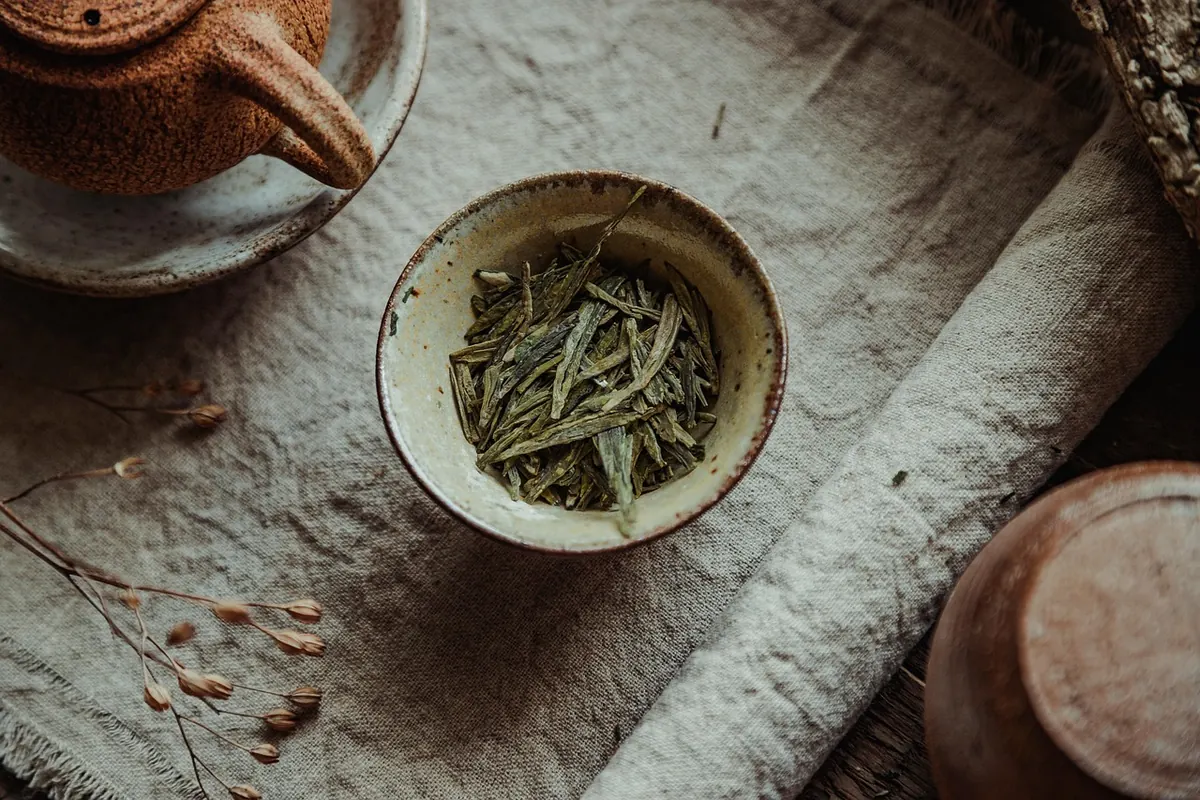
Loose leaf tea needs two things from whatever holds it: space to expand and a steady flow of water around every leaf. A dry leaf can roughly double or triple in size once wet — a tightly rolled oolong unfurls into something you'd mistake for a small salad. If the leaf is crammed into a space smaller than its finished size, it never opens properly. Water only reaches the outside of the clump, and you get a cup that tastes like a weaker version of what you paid for.
Flow matters just as much. Leaves release flavor into water that's moving. If the tea sits in a sealed pocket with barely circulating water, extraction is slow and uneven: harsh at the edges, flat in the middle. The best infuser is boring. It holds the leaf loosely, lets water in from every side, and then gets out of the way.
Basket Infusers: The Roomy, Reliable Default
A basket is a wide, perforated strainer — stainless steel, ceramic, or fine mesh — that sits inside your cup or teapot, ideally reaching most of the way down. It's the closest thing to brewing with the leaves completely free, which is the method most tea makers treat as the reference point.
Where it wins: volume. Whole-leaf teas, big twisted leaves like a Yunnan gold, and rolled oolongs that swell dramatically all have room to move. You can also see what you're doing, which makes it easy to judge how much leaf you've added.
Where it frustrates: baskets are the least portable option, and a shallow one that only dips an inch into the water can leave the bottom half of your leaf dry. Very fine mesh clogs with fannings; wide holes let small pieces through. Check that the basket reaches the liquid, not just the rim of the mug.
Ball Infusers: Portable, Pocketable, Easy to Overpack
The classic two-halves mesh ball, usually with a chain and a tiny clasp. It's inexpensive, it fits in a bag, and it works fine for a quick cup away from home.
The catch is size. A standard ball holds a teaspoon of leaf with maybe a little room to spare — fine for a light, unrolled tea, cramped for almost anything else. Tight screw-together balls are worse than hinged ones, because the thread takes up interior space and the mesh is often coarser.
A few things make a ball behave better:
- Fill it no more than half full, then shake it so the leaf can spread.
- Choose a hinged ball with fine, well-formed mesh over a screw-together model.
- Open it over the bin, not the sink — spent leaf down a drain is a plumbing nuisance.
- Retire any ball with bent rims; a bad seal means leaf escaping into the cup.
Silicone Infusers: Convenient, but a Real Compromise
Silicone strainers come in two forms: flexible pods with slits, and silicone baskets with a stainless mesh floor. The all-silicone versions are the ones to think hardest about.
Slits let water in, but far less of it than mesh does, and the rigid walls don't let the leaf spread. You end up with slower, less even extraction and a cup that tastes flatter than the same tea brewed in a basket. On the other side of the ledger: they're quiet in the cup, don't clink against your teeth, are easy to grab, and can go in the dishwasher. Those are real advantages with kids around, or in an office where you'd rather not rattle metal during a meeting.
Silicone baskets with a steel mesh base are a better middle ground. You get the roominess of a basket and the easy handling of silicone, and the mesh does the work of letting water through. If you're set on silicone, buy that version. Check that it's food-grade and doesn't hold onto smells — cheaper ones pick up the aroma of a strong breakfast blend and pass it along to your next green tea.
Comparing the Three at a Glance
- Leaf expansion: basket (best) — silicone basket (good) — ball (limited) — all-silicone pod (least).
- Flavor release: basket (even and full) — silicone basket (close behind) — ball (fine with small leaf) — silicone pod (muted).
- Cleanup: basket (rinse and dry, occasional deep clean) — silicone (dishwasher-friendly, may retain aroma) — ball (fiddly to open while hot, hardest to scrub).
- Portability: ball and silicone pod (best) — silicone basket (okay) — basket (leave it home).
- Best for: whole leaf and rolled teas in a basket; one cup of broken leaf or a travel bag in a ball; a forgiving, quiet, low-effort cup in silicone.
Cleaning, and the Tannin Habit
Whatever you choose, the same rules apply. Empty the leaf promptly — leaving wet tea overnight in a ball or pod means the next cup carries a stale, stewed note. Rinse in hot water and let the piece dry completely before closing it, because trapped moisture rusts mesh and sours silicone.
Every few weeks, give metal infusers a deeper clean. A paste of baking soda and water, worked in with an old toothbrush, lifts the brown film that builds in the mesh and dulls flavor. For silicone, a soak in hot water with a splash of white vinegar does the same job. Keep plastic and silicone parts away from hot elements.
One more thing worth knowing: mesh holds onto odors. Smoky or heavily spiced teas will scent a ball or silicone pod for a while. If you drink across a wide range, keep a separate infuser for the heavy stuff.
Matching the Infuser to the Tea
The leaf usually makes the decision for you.
Use a basket for
- Whole-leaf greens, whites, and oolongs that unfurl.
- Teas you brew gongfu-style or in a small pot with repeated steeps.
- Any tea you want to taste exactly as intended.
Use a ball for
- Small-leaf or broken teas: CTC blends, most bag-style black teas, a mug of fannings.
- Travel, camping, and office cups where you don't want loose leaf floating on top.
Use silicone for
- An easy, quiet, dishwasher-safe option at home or at a desk.
- Cups for children or anyone who doesn't want metal in the mug — choose a mesh-bottomed version where you can.
Pick One Good Infuser and Stop Thinking About It
If you only buy one, buy a stainless basket that fits your most-used mug and reaches nearly to the bottom. It costs about the same as a decent tin of tea, and it will improve every cup you make with loose leaf. Add a hinged ball for travel, and a mesh-bottomed silicone basket if you want a grab-and-go option for the office.
Then go back to the parts that matter more: fresh leaf, water just off the boil or cooler for greens, and a timer so you don't oversteep the first cup while you're still deciding which infuser to use.
Photo: mirkostoedter / Pixabay